

It’s a busy world. You’re eating breakfast and your mind is already planning out the day ahead, while listening to the radio to catch up on what’s happening in the world around you. You might have kids or a partner around you, packing their lunch in between bites of your own breakfast. In the rush to complete these necessary tasks, you might find yourself slipping away from the present moment. You’re already worried about the groceries you need to pick up after work later in the afternoon, and what you’ll cook for dinner- while your first meal of the day sits in front of you. In doing this, you’re missing out on what you’re doing and how you’re feeling. Did you notice whether you felt well-rested this morning or the colourful flowers in bloom along your commute to work?
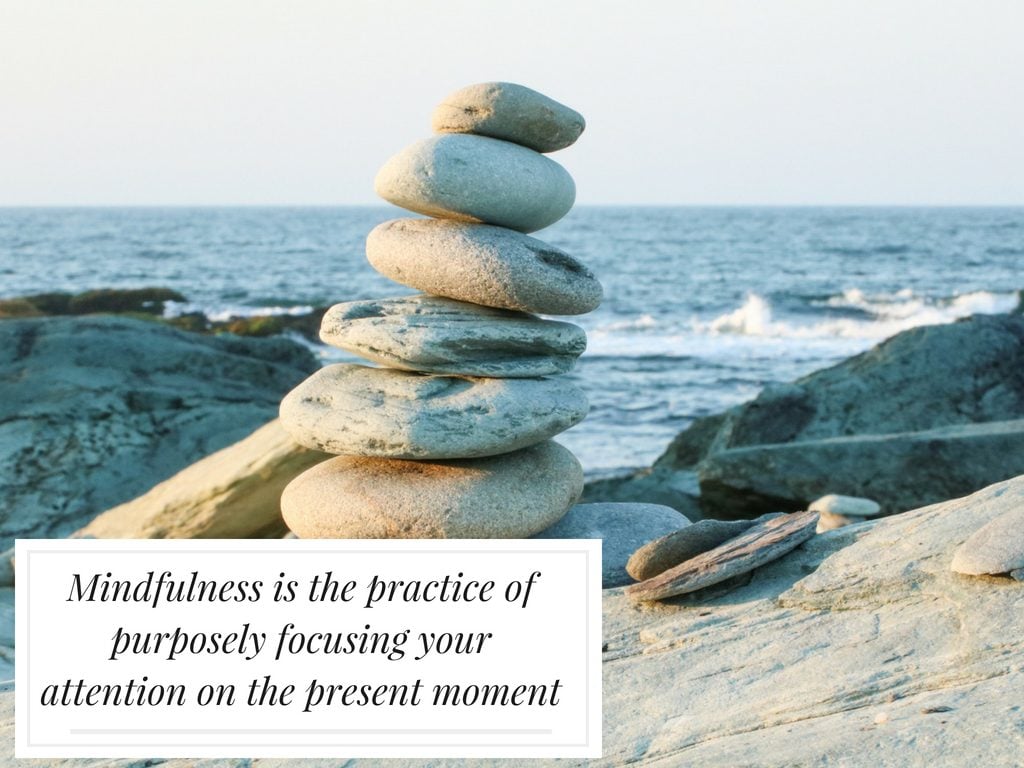
Mindfulness is the practice of purposely focusing your attention on the present moment—and accepting it without judgment. Mindfulness can be a key element in stress reduction and overall happiness. It can improve your wellbeing, your physical health and your mental health.
Here are 6 Simple Ways to Practice Mindfulness:
Start when it’s easy
While many people turn to mindfulness when they’re in a stressful situation, it’s best to try and start when you aren’t in a crisis. It’s like turning up for a Grand Final match of sport when you’ve never attended any training sessions or other games. While mindfulness is a great option for those in a stressful situation, it’s a lot easier to start practicing in pleasant situations and prepare yourself for any of life’s more difficult moments.
Pay attention to something you do every day
A good way to start is to pick one or two things you do every day- say brushing your teeth or reading a book, and get into the habit of focusing on what you’re doing. Your mind will wander, but don’t worry, just bring your attention back to the book, your teeth, or whatever it may be!
Approach situations with curiosity
Curiosity can allow you to get out of a difficult headspace and gain more clarity so you can make the most informed choice about how to move forward.
Remember the four T’s
Those stand for: transitions, teatime, toilet, and telephone. Meena Srinivasan, author of Teach, Breathe, Learn: Mindfulness In and Out of the Classroom explains this idea and encourages you each time you are moving from one activity to the next, drinking tea or coffee, using the bathroom, or checking your phone, take a couple deep breaths and come back to the present moment.
Focus on your breathing whenever you can
It all comes back to breathing. It’s a key mindfulness practice because it is something we always do out of necessity, and it’s also a good way to bring our awareness back to the present moment. Taking three or four deep breaths (and paying attention to them) at any given moment can help you calm down and focus.

Ground yourself physically
If concentrating on your breathing isn’t enough, take a seat on a chair or a cushion, or stand outside (barefoot if possible). Feel the ground underneath you, notice what is beneath you, and feel the touch of your body and the chair/ground. These actions will bring your awareness into the present.
Exploring Mindfulness Techniques Further
There are many different ways to practice mindfulness, although the goal of any mindfulness technique is the same: to achieve a state of alert, focused relaxation by deliberately paying attention to thoughts and sensations without judgement. This allows your mind to refocus on the present moment.
All mindfulness techniques are a form of meditation.
Basic mindfulness meditation –Sit quietly and focus on your natural breathing or on a word or “mantra” that you repeat silently. Allow thoughts to come and go without judgment and return to your focus on breath or mantra.
Body sensations –Notice subtle body sensations such as an itch or tingling without judgment and let them pass. Notice each part of your body in succession from head to toe.
Sensory – Notice sights, sounds, smells, tastes, and touches. Name them “sight,” “sound,” “smell,” “taste,” or “touch” without judgment and let them go.
Emotions – Allow emotions to be present without judgment. Practice a steady and relaxed naming of emotions: “joy,” “anger,” “frustration.” Accept the presence of the emotions without judgment and let them go.
Urge surfing – Cope with cravings (for addictive substances or behaviors) and allow them to pass. Notice how your body feels as the craving enters. Replace the wish for the craving to go away with the certain knowledge that it will subside.

Where to get help
Learn how you can introduce mindfulness practice to your life:
Black Dog Institute provides a factsheet with mindfulness techniques to practice at home.
Smiling Mind is a free app which helps develop mindfulness skills and can reduce stress.
Breathe – ReachOut.com suitable for young people wishing to practice and develop mindfulness.