

Family and relationship problems can occur to anyone — couples, spouses, children, siblings, etc. And that is normal. All relationships have their own share of difficulties and challenges. However, it can be overwhelming. If you feel that your problems are starting to consume your life and your partner’s, seek professional help.
In relationships, passive aggressive behaviors are often used to avoid the direct confrontation of short-term conflict, however in the long-term, this behaviour can be even more destructive to a relationship than outright aggression. To keep assertive communication flowing in your relationship, there are things you need to avoid. There may be things you’re doing that are harmful to your relationship that have become so habitual that you don’t notice it’s what you’re doing. Here are 8 ways in which you can ruin a relationship:
Being abusive
This is not only physical abuse. It also includes put-downs, sarcasm, negative and hurtful comments, deliberately withholding affection, refusing to talk, and repeatedly threatening to leave the relationship.
Being defensive
Individuals who are always on the defensive are so engrossed in protecting themselves that they don’t leave the opportunity for growth in their relationships with others. They can’t admit that they have faults and so make the same mistakes over and over, wearing down the relationship.
Being critical
If you’re always complaining and pointing out your partner’s flaws then you’ll soon undermine your partner’s self-esteem. An overly critical person may be behaving this way due to issues of their own.
Being always right
If you think that you’re always right, it means you believe the other person’s always wrong – and who wants to feel that they have nothing to contribute, or their point of view is stupid, unwanted and wrong. You should feel valued and encouraged in a relationship.
Being selfish
You will have little to add to a relationship if you’re constantly tied up in your own needs and desires.
Being dishonest
Trust is the foundation of a healthy relationship. Being dishonest includes being unfaithful or hiding the whole truth.
Being superior
If you’re quick to judge others or to put people down, or you think that you are better than everybody else then you’re setting yourself up for trouble. Although we may excel at times, every person is worthy of respect and should not be put down to boost yourself up.
Being controlling
Your partner is not your property. Your partner should feel comfortable being themselves, with their own views and beliefs. They don’t answer to you; and they don’t have to change themselves. They’re autonomous and free – and they’re not there to be controlled. You shouldn’t enter a relationship thinking that you can change your partner.
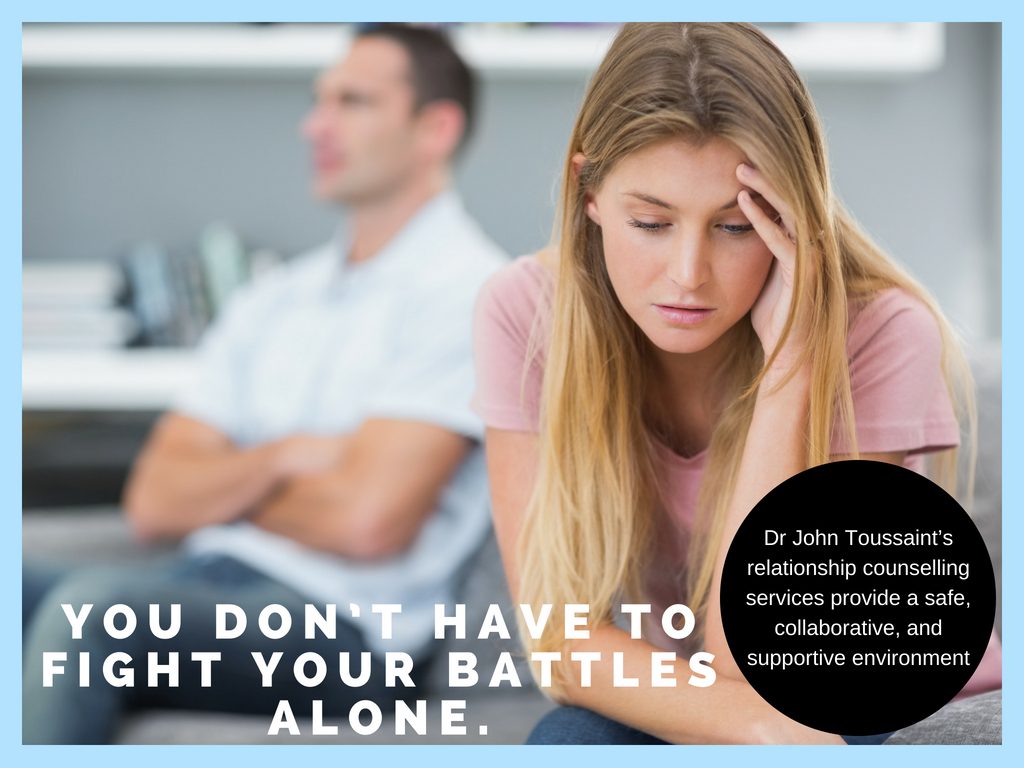
You don’t have to fight your battles alone. There are many types of assistance available including mediation, workshops, courses, and family and relationship counselling. If you need professional help, get in touch with Dr John Toussaint. Together, you will find a way so you and your partner or family can live healthier, happier, and more fulfilling lives.